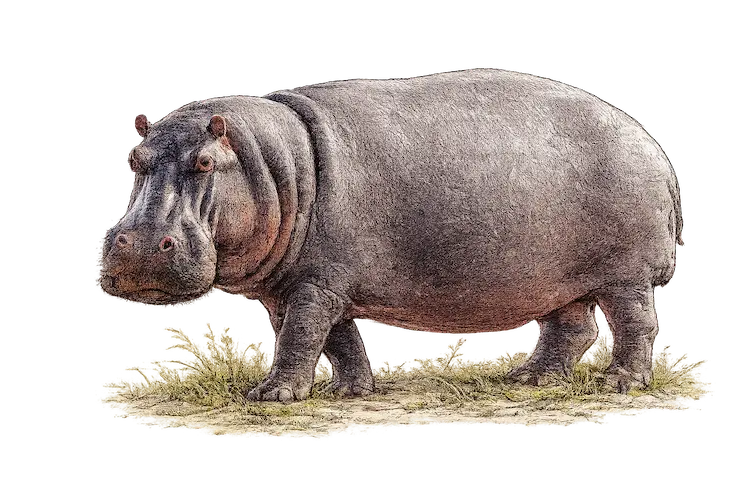
Hippopotamus
(Hippopotamus amphibius)
The hippopotamus is one of the most iconic and quietly powerful animals found in Kruger National Park. Often seen resting in rivers and dams during the heat of the day, these large, semi-aquatic mammals bring a sense of stillness to the landscape, broken only by the occasional ripple or deep exhale as they surface.
Despite their calm appearance, hippos are among the most formidable animals in Africa. Hippo sightings are common throughout Kruger, especially near permanent water, where groups gather in loose pods. For many visitors, watching a hippopotamus slowly emerge from the water at sunset is one of the more memorable and atmospheric experiences of the park.
This guide covers identification, habitat, behaviour, diet, breeding, and the best spots to find hippos while exploring Kruger's wildlife.
Identification
The hippopotamus is a large, heavy-bodied mammal with a barrel-shaped torso, short legs, and a broad, square head. Its skin appears grey to pinkish-brown, often taking on a slightly purplish tone in softer light. Despite its bulk, the body is smooth and largely hairless, with deep folds around the neck and shoulders that are especially visible when the animal is out of the water.
One of the most distinctive features is the placement of the eyes, ears, and nostrils high on the head, allowing the animal to remain almost completely submerged while still being aware of its surroundings. When resting in water, only these features are visible, often giving away a hippo's presence as a cluster of small shapes breaking the surface.
While it may be compared in size to animals like the African buffalo, the hippopotamus is unmistakable once seen properly. Its semi-aquatic lifestyle, rounded form, and slow, deliberate movement on land make it one of the easier large mammals to identify in Kruger.
Habitat & Where It Lives
Hippopotamus are closely tied to water and are most commonly found in rivers, dams, and large waterholes throughout the park. They favour areas with permanent water, where they can remain submerged during the heat of the day and move onto land to feed at night.
Some of the most reliable hippo sightings occur along major river systems such as the Sabie, Crocodile, and Olifants Rivers, particularly in the southern and central regions of the park. These waterways support stable populations and often provide excellent viewing opportunities from bridges, viewpoints, and rest camps.
Visitors exploring the Kruger rest camps near water will often hear hippos before they see them, especially in the evenings when their calls carry across the landscape. Their presence is a strong indicator of healthy aquatic systems and adds a real sense of atmosphere to the bush.
Behaviour
Hippopotamus are highly social animals, typically found in groups known as pods, which can range from a few individuals to well over a dozen in larger rivers. These groups are usually centred around dominant males, with females and younger animals occupying the surrounding space within the water. Observing hippo pod behaviour in Kruger is one of the more rewarding experiences the park offers, particularly from a safe vantage point overlooking a river.
During the day, hippos spend most of their time submerged to keep cool, often resting quietly with only their eyes, ears, and nostrils visible. Despite this calm appearance, hippos are considered among the most dangerous animals in Africa — highly territorial in water and unpredictable if approached too closely. Short bursts of movement, sudden yawning displays, and loud vocalisations are all part of their communication and should be taken as warning signs.
At night, hippos leave the water to graze, sometimes travelling several kilometres in search of grass. These movements are usually solitary, with well-worn paths leading away from rivers into the surrounding savanna. While hippos may appear slow and docile, they are capable of surprising speed on land when disturbed — another reason why hippo safety in Kruger should always be taken seriously.
Although fully grown hippos have few natural predators, young calves may occasionally fall prey to animals such as the lion. Their true strength lies in their size, social structure, and strong connection to water, making them one of the more dominant forces within Kruger's aquatic environments.
Diet
Hippopotamus are herbivores, feeding primarily on short grasses found along riverbanks and open floodplains. Despite their enormous size, a hippo's diet is relatively simple — consisting almost entirely of grazing rather than browsing, which often surprises visitors expecting a more varied appetite.
Most feeding takes place at night, when hippos leave the safety of the water and move onto land to graze. They feed steadily, using their broad lips to crop grass close to the ground, often following the same well-worn paths night after night. A single hippo can consume around 35 to 40 kilograms of grass in one night.
This dependence on grass links hippo feeding behaviour closely to Kruger's wider grassland ecosystems, highlighting the balance between water, vegetation, and wildlife that defines much of the park's landscape.
Breeding
Hippopotamus can breed throughout the year, although births are more common during the wetter months when grazing conditions are better. The hippo gestation period is around eight months, after which a single calf is born — usually in shallow water or on a nearby riverbank.
Hippo calves are able to swim almost immediately after birth and will often be seen resting on their mother's back in deeper water. This behaviour not only helps the baby hippo breathe more easily but also keeps it safe from potential threats — including crocodiles and rival males.
Mothers are highly protective, keeping their young close within the safety of the pod. Seeing a hippo calf in Kruger is a special sighting — these early months are a critical time, and the bond between mother and calf is one of the more touching behaviours you can witness in the park.
How to Find Hippos in Kruger National Park
Hippos are among the more reliable large mammals to see in Kruger, provided you are near water. Rivers, dams, and larger waterholes are the key areas to focus on, particularly in the southern and central parts of the park. Knowing where to look for hippos in Kruger makes a real difference — especially if your time in the park is limited.
Early mornings and late afternoons offer the best opportunities for activity. During these quieter times, hippos may be seen shifting in the water, interacting within pods, or occasionally moving in and out of the shallows. Bridges over major rivers are especially productive, often allowing for a safe, elevated view into areas where hippos gather.
In the evenings, you may hear hippos long before you see them. Their deep, echoing calls carry across the bush, often signalling movement as they begin to leave the water to graze. Patience at a good water source will usually reward you with a steady and immersive sighting. Visiting during the dry season gives you the best chance of reliable hippo sightings, as animals concentrate around permanent water — see our guide on the best time to visit Kruger for more detail.
While sightings can be frequent, understanding their behaviour and knowing where to stop makes a significant difference. This is where a guided hippo safari experience adds real value, helping you position yourself in the right place at the right time.
If you would like to explore these areas with a deeper level of insight, you can join one of our private Kruger safaris or browse our Kruger safari packages, designed to give you the time and flexibility to experience the park properly.
Why People Love Seeing Hippos in Kruger
There is something quietly captivating about watching a hippopotamus in its natural setting. Much of the time, very little seems to happen — just a still stretch of water, the occasional ripple, and the soft rise and fall of an animal breathing just beneath the surface.
And then, slowly, the scene changes. A head lifts, water rolls off its back, and the full size of the animal becomes clear. It is a subtle kind of drama, one that rewards patience rather than movement, and often leaves a lasting impression long after the sighting has passed.
For many visitors, hippos become part of the rhythm of Kruger. Their calls at dusk, their presence in the rivers, and their steady, unhurried behaviour create a sense of place that is difficult to replicate elsewhere. It is one of those wildlife encounters in Kruger that stays with you long after you leave.
It is not always the most dramatic sighting, but it is often one of the most memorable — a reminder that the bush is as much about stillness and atmosphere as it is about movement and action.
Ready to See Hippos in Kruger for Yourself?
Whether you are hoping to watch hippos resting in a quiet river pool, listen to their calls carrying across the bush at dusk, or simply take in the slower rhythm of the park, a private guided safari gives you the time, flexibility, and local knowledge to experience Kruger properly — on your terms, at your pace.
Hippo FAQ
Are there hippos in Kruger National Park?
Yes, hippos are common in Kruger National Park and are one of the more reliable large mammals to see, provided you are near water. Rivers, dams, and larger waterholes throughout the park support stable hippo populations year round.
Where is the best place to see hippos in Kruger?
Some of the most reliable spots include Sunset Dam near Lower Sabie, the Sabie River between Lower Sabie and Skukuza, Lake Panic near Skukuza, and the Olifants, Crocodile, and Letaba Rivers. Bridges over major rivers are especially productive for elevated viewing. Hippo Pool near Crocodile Bridge Gate is also well worth a stop.
How many hippos are in Kruger National Park?
Kruger National Park is home to an estimated 3,000 hippos, making it one of the strongholds for the species in South Africa. They are distributed across the major river systems and permanent water sources throughout the park.
Are hippos dangerous?
Yes, hippos are considered one of the most dangerous animals in Africa. They are highly territorial in water and can be unpredictable on land, especially if surprised or separated from water. Always view hippos from a safe distance and never approach them on foot.
What do hippos eat?
Hippos are herbivores and feed almost entirely on grass. Despite their size, a hippo's diet is surprisingly simple — they graze at night, typically consuming around 35 to 40 kilograms of grass in a single evening, before returning to the water before sunrise.
When are hippos most active?
Hippos are most active in the early morning and late afternoon, when they can be seen moving, interacting within pods, or shifting in and out of the shallows. They leave the water at dusk to graze and return before sunrise. During winter, hippos may also be seen basking on riverbanks during the day to warm up.
Can you see hippos out of the water in Kruger?
Yes, though it is less common during summer. In the cooler winter months hippos are more likely to be seen out of the water during the day, basking on riverbanks to warm up. At night they regularly leave the water to graze, sometimes travelling several kilometres from the river.