
Impala Lily
(Adenium multiflorum)
The Impala Lily is one of the most beautiful flowering plants to look for in Kruger National Park. Also known as the Sabie Star or Kudu Lily, this striking succulent shrub produces bright white, pink and crimson flowers during the dry winter months, often when much of the surrounding bushveld is leafless and muted in colour.
For many visitors, the Impala Lily is a reminder that a Kruger private safari is not only about the Big 5. Slowing down for plants, flowers, birds and smaller details can make the experience far richer. When in full bloom, the Impala Lily stands out beautifully against rocky ground, dry woodland and rest camp gardens, making it one of Kruger’s most rewarding seasonal flowers to notice.
Identification
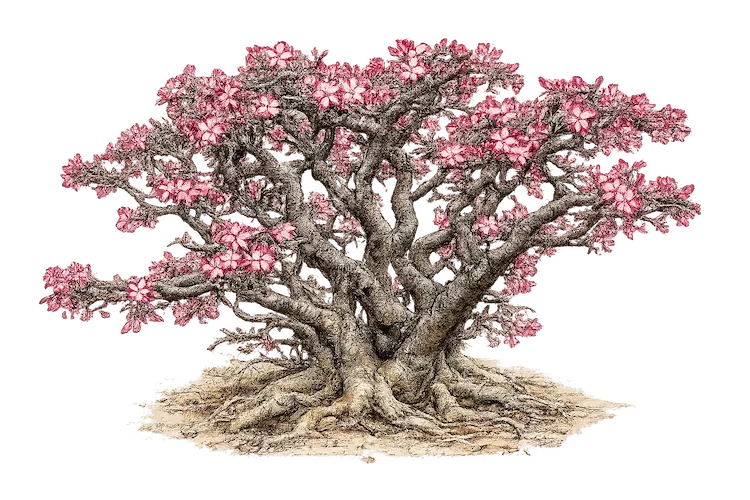
The Impala Lily is a small, slow-growing succulent tree or shrub that is immediately recognisable once you know what to look for. It typically grows between 1 and 3 metres tall, with a thick, swollen base known as a caudex. This water-storing trunk allows the plant to survive long dry periods in the harsh environments of Kruger National Park.
Its branches are grey to brown, smooth when young and becoming more textured with age. During the dry season, the plant often appears leafless, which makes its flowers even more striking. The blooms are star-shaped and usually white with bold pink to deep red margins, sometimes with fine streaking towards the centre. These flowers often appear in clusters at the ends of branches, creating a vivid contrast against the bare stems.
When not in flower, the Impala Lily can still be identified by its unusual growth form and thickened base, although it may be less obvious to casual visitors. For those taking a slower, more observant approach on a photographic safari, noticing these subtle details can make all the difference.
Habitat and Where It Grows
The Impala Lily is typically found in dry, open woodland and rocky areas, favouring well-drained soils where its thickened base can store water efficiently. In Kruger National Park, it is most commonly associated with granitic and sandy landscapes, often growing among rocks, on slopes, or in lightly wooded savanna.
This species is especially well represented in the southern and central parts of the park, where conditions are ideal for its growth. Areas around rest camps, rocky outcrops, and quieter loops can often produce sightings, particularly if you are actively scanning the vegetation rather than focusing only on larger wildlife.
Beyond Kruger, the Impala Lily occurs across parts of southern Africa, including Mozambique, Zimbabwe, and northern South Africa. However, within Kruger, it remains one of the more rewarding plants to find due to its seasonal flowering and striking appearance. On a private safari, taking the time to explore these quieter habitats can greatly increase your chances of encountering it.
Flowering and Seasonality
One of the most remarkable features of the Impala Lily is its timing. Unlike many plants that flower during the rainy summer months, this species typically blooms in late winter to early spring, usually between July and October. This is the dry season in Kruger National Park, when much of the vegetation is sparse and subdued in colour.
During this period, the Impala Lily often sheds its leaves entirely, putting all its energy into producing clusters of vivid flowers. The result is a striking display of pink, red and white blooms on otherwise bare branches, making it one of the easiest plants to spot if you are visiting at the right time of year.
If you are planning your trip around seasonal highlights, this makes the cooler, drier months particularly rewarding. While this time is already excellent for wildlife viewing—especially for species covered in our Kruger mammals guide—it also offers the added bonus of seeing the Impala Lily in full bloom.
For travellers deciding when to visit, aligning your safari with this flowering window can add a unique botanical element to your experience. You can learn more about seasonal conditions in our detailed Kruger National Park weather guide, which helps you match wildlife sightings with natural events like flowering cycles.
How to Find Impala Lilies
Finding Impala Lilies in Kruger National Park is less about luck and more about slowing down and knowing where to look. These plants favour rocky, well-drained areas, so keeping an eye on granite outcrops, hillsides, and open woodland is key. They are not typically found in dense riverine vegetation, which helps narrow your search.
The best time to spot them is during the dry winter months when they are in full flower. At this time, their bright blooms stand out clearly against the otherwise muted bushveld, making them surprisingly easy to notice once your eye is trained. Driving slowly along quieter roads or loops often gives you the best chance, especially if you scan beyond the road edge rather than focusing only on large animals.
Areas around rest camps, rocky viewpoints, and less busy sections of the park can be particularly productive. If you are exploring on a private safari, your guide can stop and spend time observing these plants properly—something that is often missed on faster-paced drives.
For photographers and nature lovers, the key is patience. Much like birding—whether you are looking for species in our Kruger birding guide or scanning for smaller details—the more time you spend observing, the more likely you are to notice these beautiful, often overlooked plants.
Why It’s Worth Looking For
In a place as iconic as Kruger National Park, it’s easy to focus only on the Big 5. But some of the most memorable safari moments come from slowing down and appreciating the smaller, quieter details—and the Impala Lily is a perfect example of that.
When in bloom, this plant transforms otherwise dry and dusty landscapes into something vibrant and alive. Its bold flowers seem to appear at a time when very little else is flowering, creating a striking contrast that feels almost unexpected. For photographers, it offers a unique subject that stands out from typical safari imagery, while for nature lovers, it provides a deeper connection to the rhythms of the bush.
There is also something rewarding about finding an Impala Lily yourself. It’s not just about seeing it—it’s about noticing it. That moment when your eye catches the colour among the branches is the kind of experience that defines a truly immersive safari.
On a private safari, these are the moments that stay with you long after the trip is over. The Impala Lily reminds us that Kruger is not just about animals, but about an entire ecosystem full of beauty waiting to be discovered.
Experience Kruger Beyond the Big 5
The Impala Lily is just one of many hidden gems waiting to be discovered in Kruger National Park. On a safari with Eugene Safaris, we don’t rush from sighting to sighting—we take the time to notice the details that make the bush truly special.
If you’re looking for a more immersive, relaxed experience where wildlife, birding, and the smaller wonders of nature all come together, explore our private safari options or browse our fully all-inclusive Kruger safari packages.
Start Planning Your SafariImpala Lily FAQ
When does the Impala Lily flower in Kruger National Park?
The Impala Lily usually flowers during the dry winter months, especially from July to September. This makes it easier to notice because the bright flowers stand out against the dry bushveld.
Where can you find Impala Lilies in Kruger National Park?
Impala Lilies are most often found in dry woodland, rocky areas, sandy soils and well-drained habitats. In Kruger, they are commonly noticed around rocky outcrops, rest camps and open bushveld areas.
Is the Impala Lily protected in Kruger National Park?
Yes. The Impala Lily is protected inside Kruger National Park, and visitors should never pick, damage or remove the plant.
What does the Impala Lily look like?
The Impala Lily is a small succulent shrub or tree with a thick swollen base, grey-brown branches and striking white, pink and red flowers. When in bloom, it is one of the most eye-catching plants in the Kruger bushveld.
Why is the Impala Lily worth looking for on safari?
The Impala Lily adds colour and seasonal beauty to the dry winter landscape. It is a rewarding plant for photographers, nature lovers and anyone who enjoys noticing the smaller details of Kruger National Park.