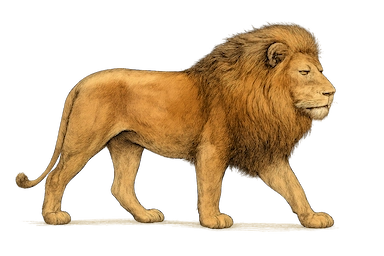
Lion
(Panthera leo)
Lion are the largest carnivores in Africa and the only truly social cats found in the bushveld. Living and hunting in coordinated prides allows them to take down much larger prey and significantly increase their success rate, especially in open areas with limited cover. This cooperative behaviour also improves the survival of their cubs, as pride members help protect and raise the young. A single lion’s roar can be heard from up to 8 kilometres away, serving as a powerful way to communicate and defend territory.
| Size | Males stand at 1.2 meters at shoulder and female 1.1 |
|---|---|
| Weight | Males weigh 190-260kg and females 130kg |
| Lifespan | 10-14 years females live longer than males |
| Habitat & Distribution | Wide tolerance, even penetrate into deserts along dry river courses. Require barest of cover to stalk, and adequate medium to large-sized prey animals |
| Gestation | 110 days, 3.5 months |
| Number of Young | one to six |
| Food | Mammals from mice to buffalo (even elephants), birds up to the size of ostrich, reptiles, insects, fish and carrion. Common prey species are giraffe, wildebeest, zebra, impala, waterbuck, warthog and kudu |
| Predators | Hyenas and man, other carnivores and pythons take cubs |