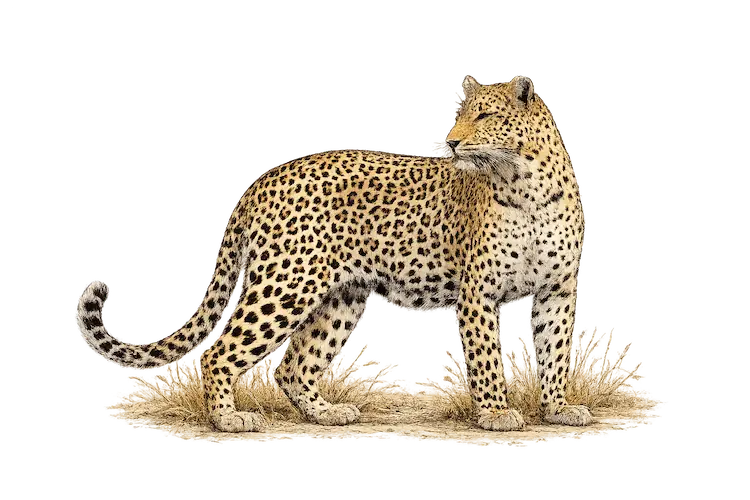
African Leopard in Kruger National Park
(Panthera pardus pardus)
The African leopard is one of the most elusive and captivating mammals in Kruger National Park. Moving silently through woodland and riverine thickets, it is rarely seen for long, yet leaves a lasting impression when it is. Kruger is home to an estimated 1,000 leopards, making it one of the most important leopard strongholds in Africa, though their secretive nature means sightings are never guaranteed.
Unlike the more social lion, the leopard lives a solitary life, relying on stealth, patience, and remarkable strength to survive. A leopard draped over a tree branch, or quietly watching from the shade, is often considered one of Kruger National Park's most memorable wildlife experiences. As one of the Big 5, the leopard draws visitors from around the world hoping for even a brief glimpse.
This guide covers identification, habitat, behaviour, diet, breeding, population, and how to find leopards while exploring Kruger's wildlife.
| Size | Males 70-80cm and female 60-70cm at shoulder |
|---|---|
| Weight | Males 60-90kg and female 30-60kg |
| Lifespan | 11-15 years |
| Habitat & Distribution | Wide range, extremely adaptable but needs good cover to hunt and hide. Territories usually include rocky outcrops and densely wooded drainage lines |
| Gestation | 100 days |
| Number of Young | two to three |
| Food | Wide variety from mice, reptiles and fish to large antelope and small carnivores, mainly medium-sized antelope like impala, readily scavenges |
| Predators | Cubs killed by lions and hyena |
Identification of Leopards in Kruger National Park
The African leopard is a medium-sized, powerfully built cat with a golden-yellow coat covered in distinctive black rosettes. These rosettes are hollow and irregular in shape, quite different from the solid black spots seen on the cheetah, and they are the clearest field mark for separating the two species in good light. The underparts are pale, often white, with solid black spotting.
Leopards are stocky and powerful, built quite differently from the slender, long-legged cheetah. Males can weigh up to 90 kg, with females considerably lighter at around 30 to 60 kg. The broad head, strong jawline, and long muscular tail are all useful identification features, particularly when a leopard is seen resting in a tree or moving slowly through open ground. They walk with a slow, deliberate gait, often pausing to scan their surroundings.
At a distance or in dense vegetation, smaller individuals may briefly resemble the African wildcat, but leopards are significantly larger, with heavier proportions and a more confident, purposeful presence. Their ability to blend into shadows and dappled light often makes them harder to spot than their size suggests.
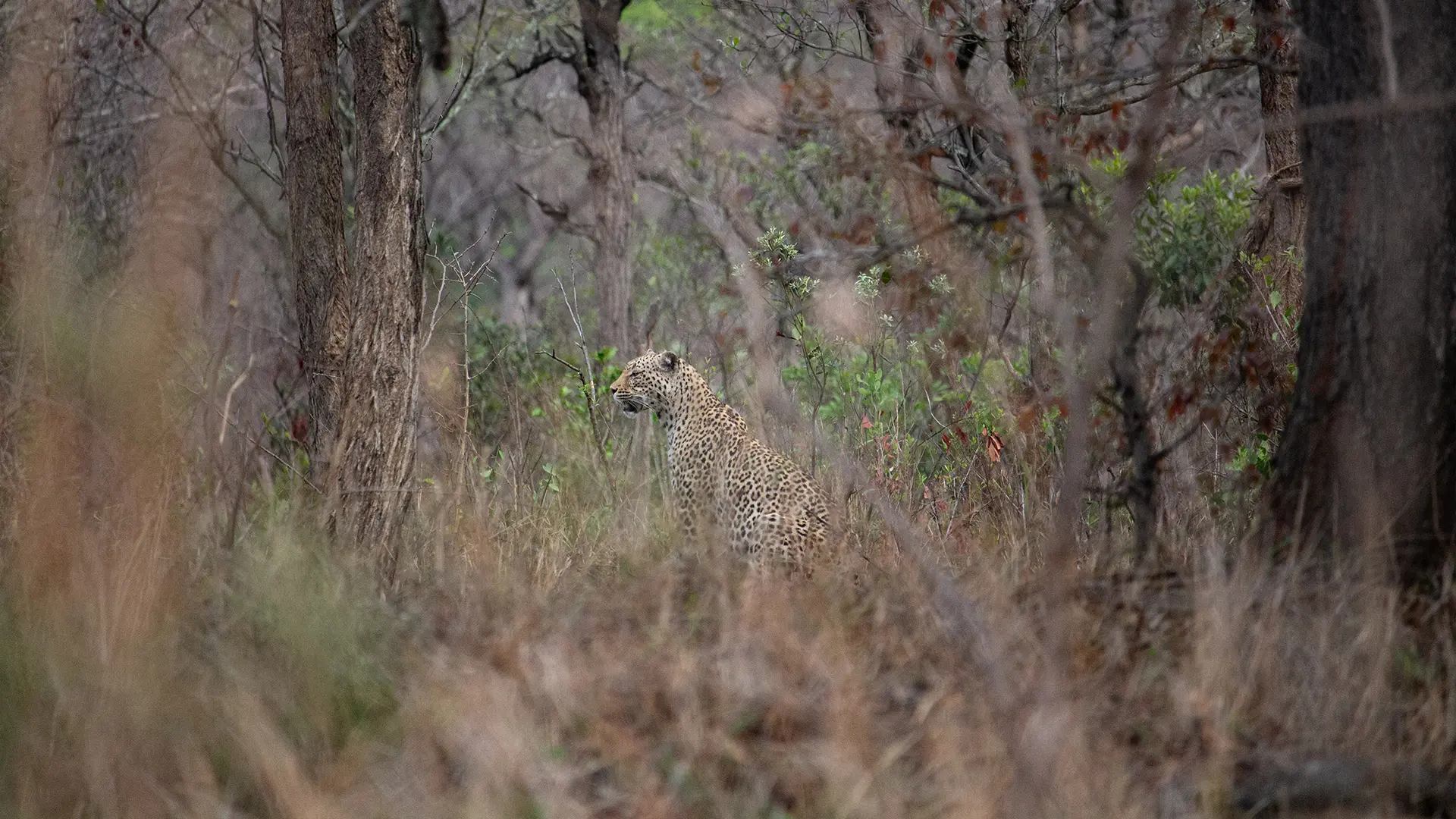
A leopard sitting still in a silver cluster-leaf tree — their camouflage makes them remarkably difficult to spot even at close range
Habitat, Distribution and Population
The African leopard is highly adaptable and can be found throughout much of Kruger National Park, but it shows a clear preference for areas that offer cover. Riverine woodland, dense thickets, rocky outcrops, and mixed savanna all provide the combination of shade, concealment, and prey that leopards rely on. Compared to more open-country predators like the cheetah, leopards favour thicker habitats where they can move and hunt largely unseen.
Kruger National Park supports an estimated population of around 1,000 leopards, making it one of the most significant leopard populations in Africa. The park's size, diversity of habitats, and high prey density — particularly impala across large parts of the park — allow leopards to maintain healthy territories across the full length of the reserve.
Leopard density across the park ranges from roughly 9 to 16 individuals per 100 km², though this varies considerably by region. Sightings are most frequent in the southern regions of the park, where visitor roads pass through denser vegetation and prey is abundant. The northern Shingwedzi region, however, is known to hold particularly high leopard densities — an area worth considering for visitors with time to explore beyond the south. Male leopards hold home ranges of up to 40 km², while females occupy smaller territories, often under 15 km², with range sizes shrinking in areas where prey is plentiful.
Leopards are especially common along drainage lines and seasonal rivers, where large trees offer shade and a safe place to hoist prey out of reach of scavengers such as the spotted hyena. Understanding these habitat patterns greatly improves the chances of a sighting — something that experienced guides on a private Kruger safari use to their advantage every day.
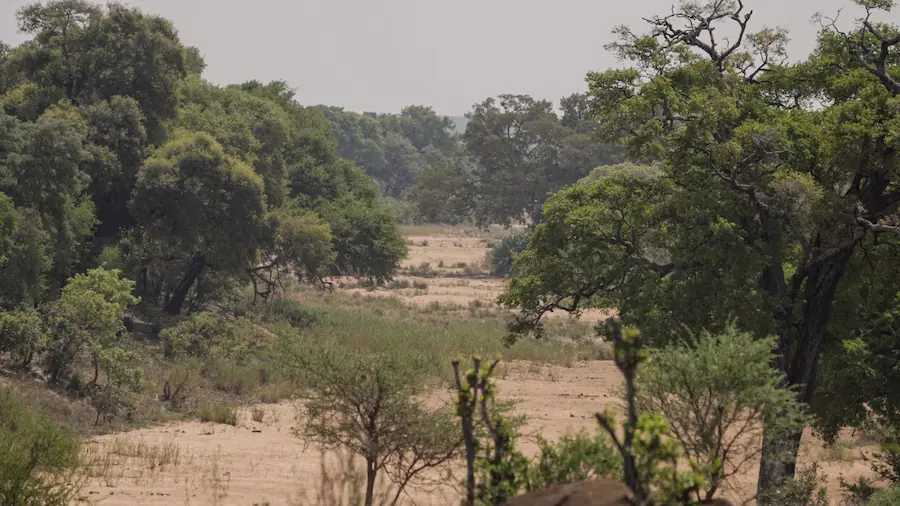
Riverine woodland near Tshokwane Picnic Site — drainage lines and seasonal rivers like this are prime leopard habitat in Kruger
Behaviour of Leopards in Kruger National Park
The African leopard is a solitary and highly secretive predator. In Kruger National Park, the best chances of a sighting come in the first two hours after sunrise and the last two hours before sunset, when leopards are most active and temperatures are cooler. During the heat of the day, they rest in thick shade or draped over the branches of large trees, often completely invisible to passing vehicles.
Unlike the social lion, leopards live and hunt alone. They rely on stealth rather than speed, moving quietly through vegetation before launching a short, explosive ambush. Once a kill is made, it is often dragged into a tree to keep it away from spotted hyenas and other scavengers — a feat that demonstrates the leopard's remarkable strength relative to its size. Leopards also mark their territories through scent and a distinctive rasping call, often described as the sound of a saw cutting through wood, which can occasionally be heard at night in the bush.
Leopards are the strongest climbers of any large predator in Kruger, spending more time in trees than lions, cheetahs, or hyenas. This behaviour protects their food, gives them a safe resting place, and provides an elevated vantage point to scan the surrounding bush. It is also one of the main reasons that scanning large trees carefully — particularly along drainage lines — is one of the most reliable ways to find them.
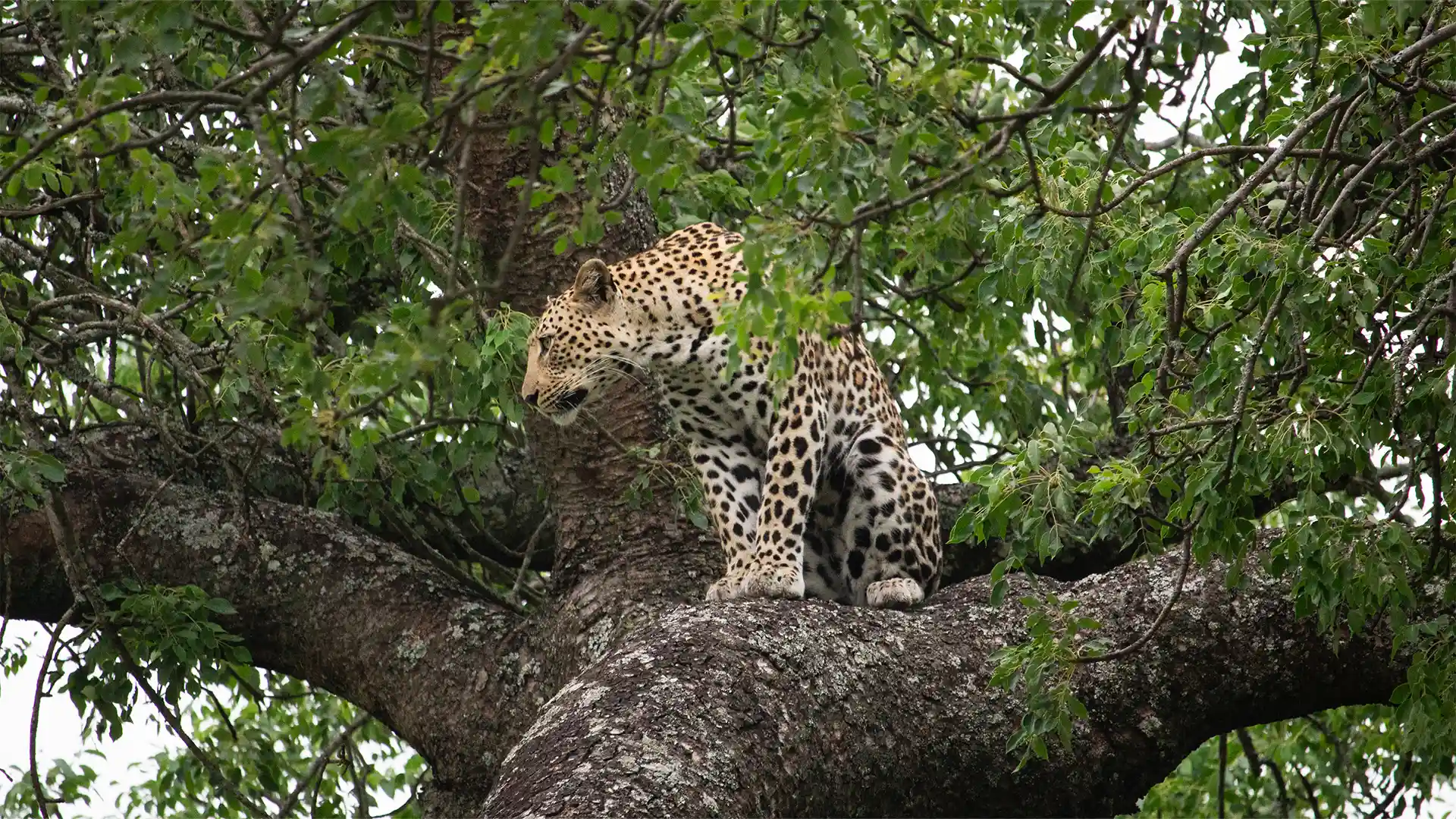
African leopard resting in a marula tree near Pretoriuskop Rest Camp — leopards spend more time in trees than any other large predator in Kruger
Diet
The African leopard is an opportunistic carnivore with a remarkably varied diet. It will feed on whatever prey is available, from small mammals, birds, and reptiles to medium-sized antelope. This adaptability is one of the reasons leopards thrive across so many different habitats within Kruger National Park.
Impala are the most common prey species in Kruger, but leopards also take duiker, warthog, young of larger antelope, and smaller predators when the opportunity arises. Few large predators in Africa hunt as wide a range of prey as the leopard.
Hunting is done through stealth and ambush. A leopard will stalk its prey quietly, using cover to get as close as possible before launching a short, explosive attack. Once a kill is made, the carcass is hauled into a tree — often an adult impala weighing 60 kg or more — keeping it safely out of reach of spotted hyenas and other scavengers for several days. This combination of patience, power, and opportunism makes the leopard one of the most effective hunters in Kruger National Park.
Breeding
African leopards do not have a strict breeding season and can reproduce throughout the year. After a gestation period of around three months, the female gives birth to a small litter, usually two to three cubs. In Kruger National Park, cubs are typically hidden in dense vegetation, rocky crevices, or thick riverine cover during their earliest weeks of life, where they are least visible to the lions, hyenas, and other predators that would readily kill them.
The mother raises her cubs entirely alone, moving them frequently between hiding spots to reduce the risk of detection. Cub mortality is high — studies from reserves adjoining Kruger suggest that more than half of all cubs do not reach independence, with predation from other large carnivores being the leading cause. Cubs that do survive begin accompanying their mother on hunts after a few months, gradually learning the patience and technique that leopard hunting demands.
Young leopards remain with their mother for up to two years before establishing their own territories. The learning period is long relative to other big cats, reflecting just how complex and demanding leopard hunting is in a competitive ecosystem like Kruger National Park, where lions and spotted hyenas are present in large numbers and every kill must be defended.
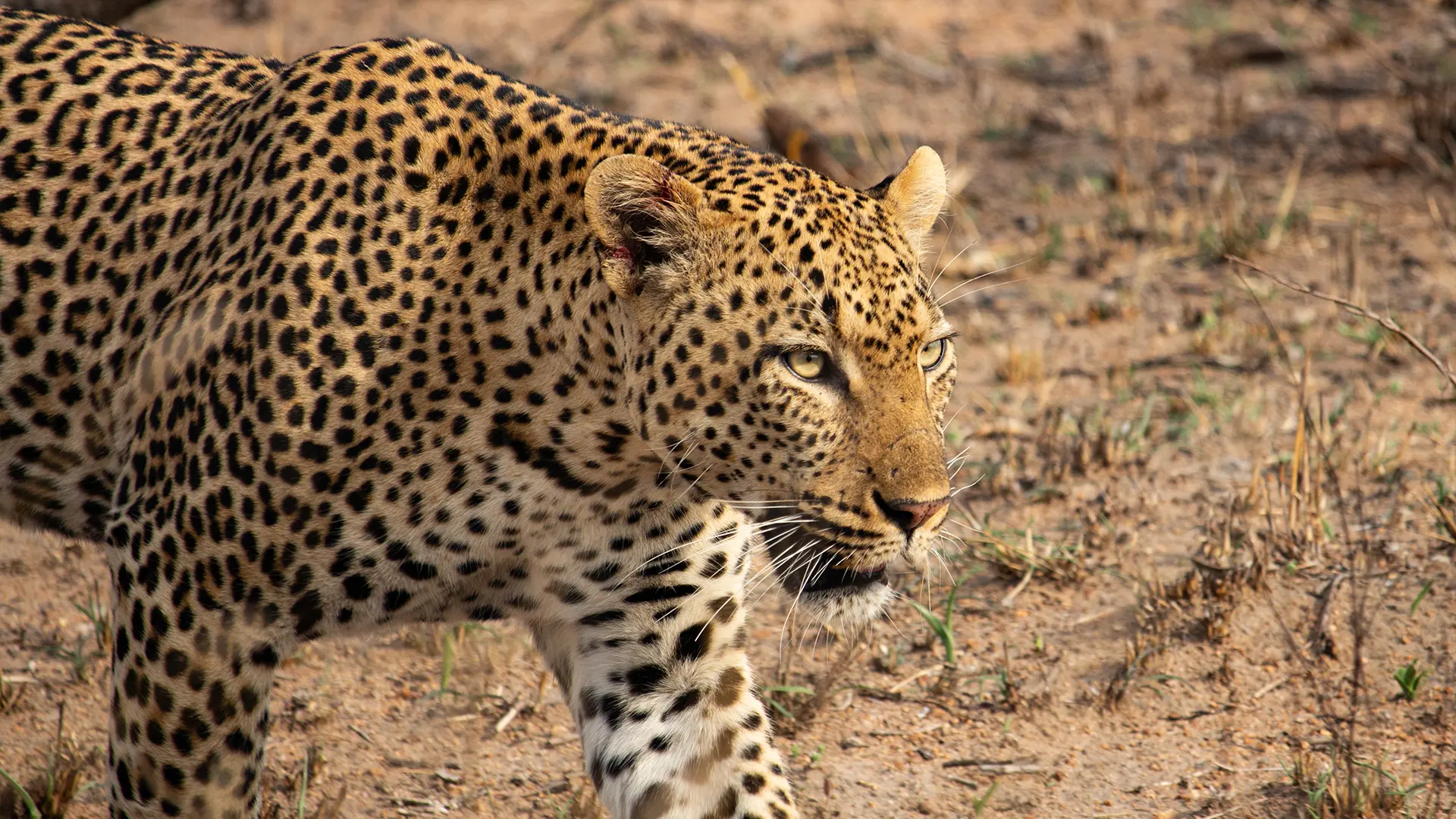
A leopard moving through open woodland in Kruger National Park — open ground sightings like this typically happen in the early morning or late afternoon
How to Find Leopards in Kruger National Park
Finding a leopard in Kruger National Park requires patience and the right knowledge of where and when to look. Leopards rely heavily on camouflage and often remain completely hidden even when close by. The best time to search is during the first two hours after sunrise and the last two hours before sunset, when leopards are most active and moving between resting sites.
Focus on areas with dense vegetation, particularly along riverbeds and drainage lines. Roads following the Sabie River in the south — such as the H4-1 — are among the most productive leopard routes in the park, offering large riverine trees where leopards rest during the day. Scanning those trees slowly and carefully is often more productive than driving fast and hoping for movement. Alarm calls from impala or vervet monkeys are worth stopping for — they frequently betray a leopard's position before you ever see the animal.
Leopard sightings are most consistent in the southern regions of the park, where prey density is higher and the landscape offers better cover. The northern Shingwedzi area also holds strong populations and receives far fewer visitors, which can mean calmer, less-crowded sightings for those willing to explore beyond the south.
A guided safari makes a significant difference. An experienced guide reads tracks, knows which trees leopards favour along specific roads, and understands how to position a vehicle for an unhurried sighting rather than a fleeting glimpse. Private Kruger safaris allow for a slower, more focused approach to searching, while all-inclusive safari packages give you expert guidance across your full stay in the park.
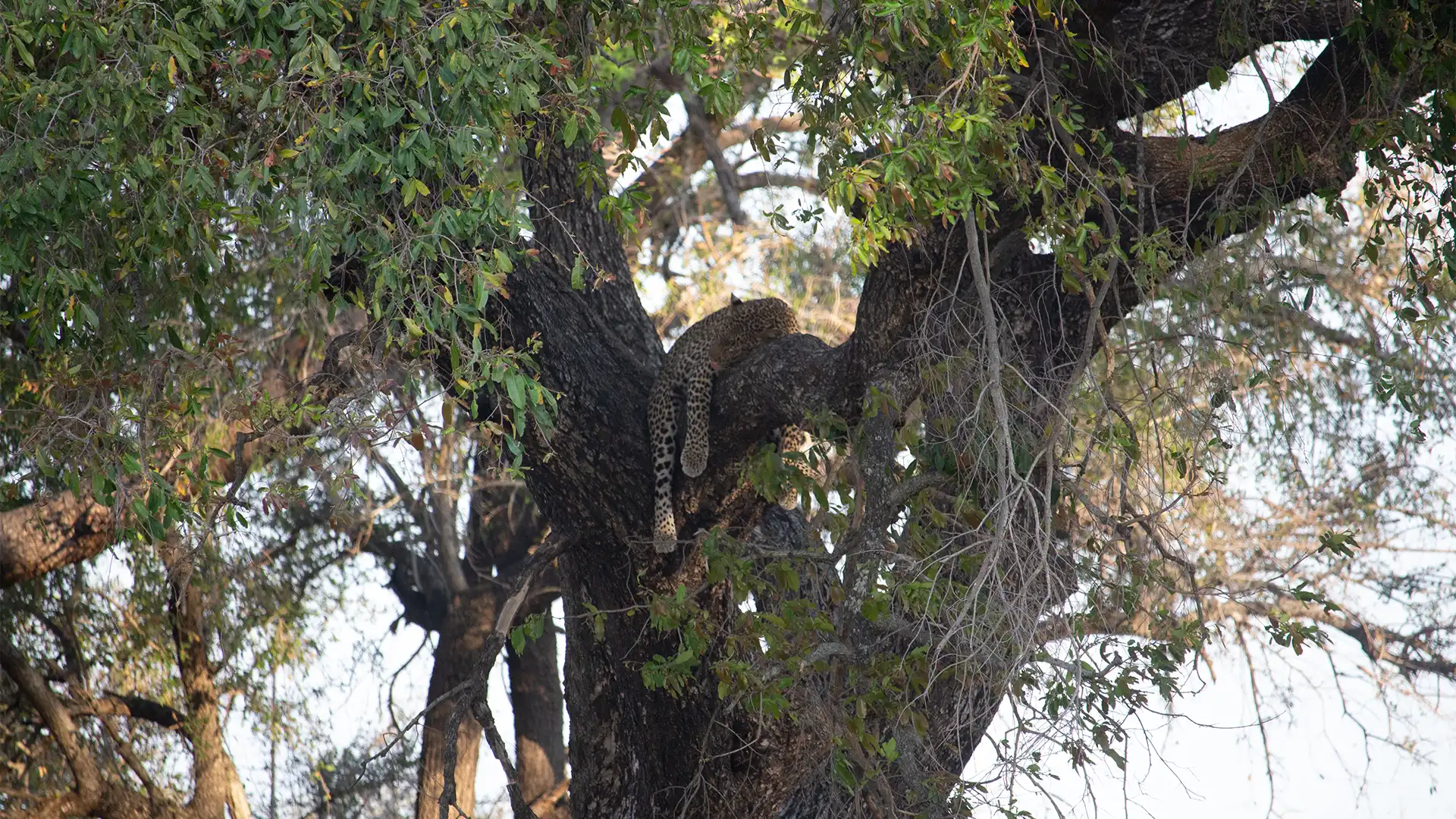
A leopard sleeping in a large jackalberry tree — scanning large trees carefully during the middle of the day is one of the most reliable ways to find leopards in Kruger
Why People Love Seeing African Leopards
Seeing an African leopard in the wild is often described as one of the most special moments in Kruger National Park. Unlike more frequently encountered animals, a leopard sighting feels earned — a quiet reward for patience and careful observation.
There is something unmistakable about the way a leopard moves. Silent, confident, and completely at ease in its surroundings, it carries a calm authority that draws attention without effort. Resting in a tree or moving through dappled light, each sighting feels intimate and unhurried — the kind that stays with you long after leaving the bush.
As one of the Big 5, the leopard holds a special place in the safari experience. But it is not just its status that makes it memorable. It is the feeling of witnessing something rarely seen, a moment that reminds you why Kruger National Park draws visitors from every corner of the world.
Plan Your Kruger Leopard Safari
A guided safari gives you the time, local knowledge, and field expertise to find leopards properly — not just to drive and hope. From tracking fresh prints along sandy roads to knowing exactly which trees to scan along the Sabie River, the right guide changes everything.
Frequently Asked Questions
How many leopards are in Kruger National Park?
Kruger National Park is home to an estimated 1,000 leopards, making it one of the most important leopard populations in Africa. Exact counts are difficult to establish because leopards are highly secretive and largely nocturnal, but density estimates across the park range from 9 to 16 individuals per 100 km². Numbers are generally stable, with the park's protected status and high prey density supporting a healthy population.
Are there leopards in Kruger National Park?
Yes. Leopards are found throughout Kruger National Park, from the southern riverine woodland around the Sabie River to the northern bushveld around Shingwedzi. With an estimated population of around 1,000 individuals, Kruger holds one of the largest and most stable leopard populations on the continent.
Are leopards common in Kruger National Park?
Leopards are present throughout Kruger National Park in good numbers, but their secretive nature makes them far harder to see than their population size would suggest. Sightings are most consistent in the southern regions of the park, where prey is abundant and large riverine trees provide ideal resting spots.
What are leopard home ranges in Kruger National Park?
Leopard home ranges in Kruger National Park vary by sex and prey availability. Male leopards hold territories of up to 40 km², while females typically occupy smaller areas of under 15 km². In parts of the park where prey such as impala is especially abundant, home ranges tend to be smaller as leopards can meet their needs within a tighter area.
What is the best time to see leopards in Kruger National Park?
The best time to see leopards in Kruger National Park is during the first two hours after sunrise and the last two hours before sunset, when they are most active and moving between resting sites. During the middle of the day they rest in thick shade or in the branches of large trees, where they are easily missed. Night drives in private concessions bordering Kruger offer an additional opportunity, as leopards are highly active after dark.
Where should I look for leopards in Kruger?
Focus on drainage lines, riverbeds, and roads lined with large trees — particularly along the Sabie River in the south. Scan tree branches slowly and carefully, as resting leopards blend into the canopy remarkably well. Alarm calls from impala or vervet monkeys are a reliable indicator that a leopard is nearby.
What do leopards eat in Kruger National Park?
Leopards are opportunistic predators with a wide diet. In Kruger National Park, impala are the most common prey, but leopards also hunt duiker, warthog, young of larger antelope, birds, and reptiles. Once a kill is made, the carcass is typically hauled into a tree to keep it away from spotted hyenas and other scavengers.
Are leopards part of the Big 5?
Yes, the African leopard is one of the Big 5, alongside lion, elephant, buffalo, and rhinoceros. The leopard is widely regarded as the most difficult of the Big 5 to see, which is part of what makes a sighting so memorable for visitors to Kruger National Park.