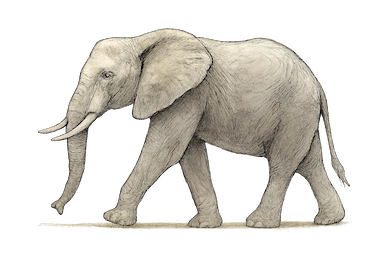
African Bush Elephant
(loxodonta africana)
The African bush elephant is the largest and heaviest land mammal on Earth. Highly intelligent and immensely powerful, these animals play a vital role in shaping their environment, often benefiting entire ecosystems, though sometimes causing disruption. They are remarkably adaptable, adjusting their diet to available resources and responding to harsh conditions by traveling long distances in search of food and water.
| Size | Bulls stand up to 3 metres at the shoulder, while cows reach around 2.5 metre |
|---|---|
| Weight | Bulls can weigh up to 6 tons, with cows reaching up to 4 tons |
| Lifespan | Typically 55-60 years |
| Habitat & Distribution | The African bush elephant occupies a wide range of habitats across Africa, wherever sufficient food, shade, and water are available. These include savannahs, woodlands, grasslands, forests, swamps, deserts, semi-deserts, and even mountainous regions |
| Gestation | Approximately 22 months, the longest gestation period of any land mammal |
| Number of Young | Usually a single calf is born at a time |
| Food | Herbivorous with a highly varied diet, feeding on up to 90% of locally available plant species. Their diet includes grasses, herbs, sedges, aquatic plants, roots, bulbs, tubers, fruits, bark, leaves, seeds, pods, and even branches and wood |
| Predators | Lions and hyenas primarily prey on calves, although in some regions lions are capable of taking down adult elephants. Other causes of death include disease, parasites, and starvation |